Shockwave therapy is one of the highest-margin service lines a practice can add. It takes a single device, minimal consumable costs per session, and patient demand that already exists in your market. Luci Medical provides the device, clinical education, and ongoing support.
Source AttributionRevenue figures sourced from a device manufacturer [1]. These are manufacturer-published estimates, not independently verified data. Actual results depend on utilization, geography, and practice type.
How We Work
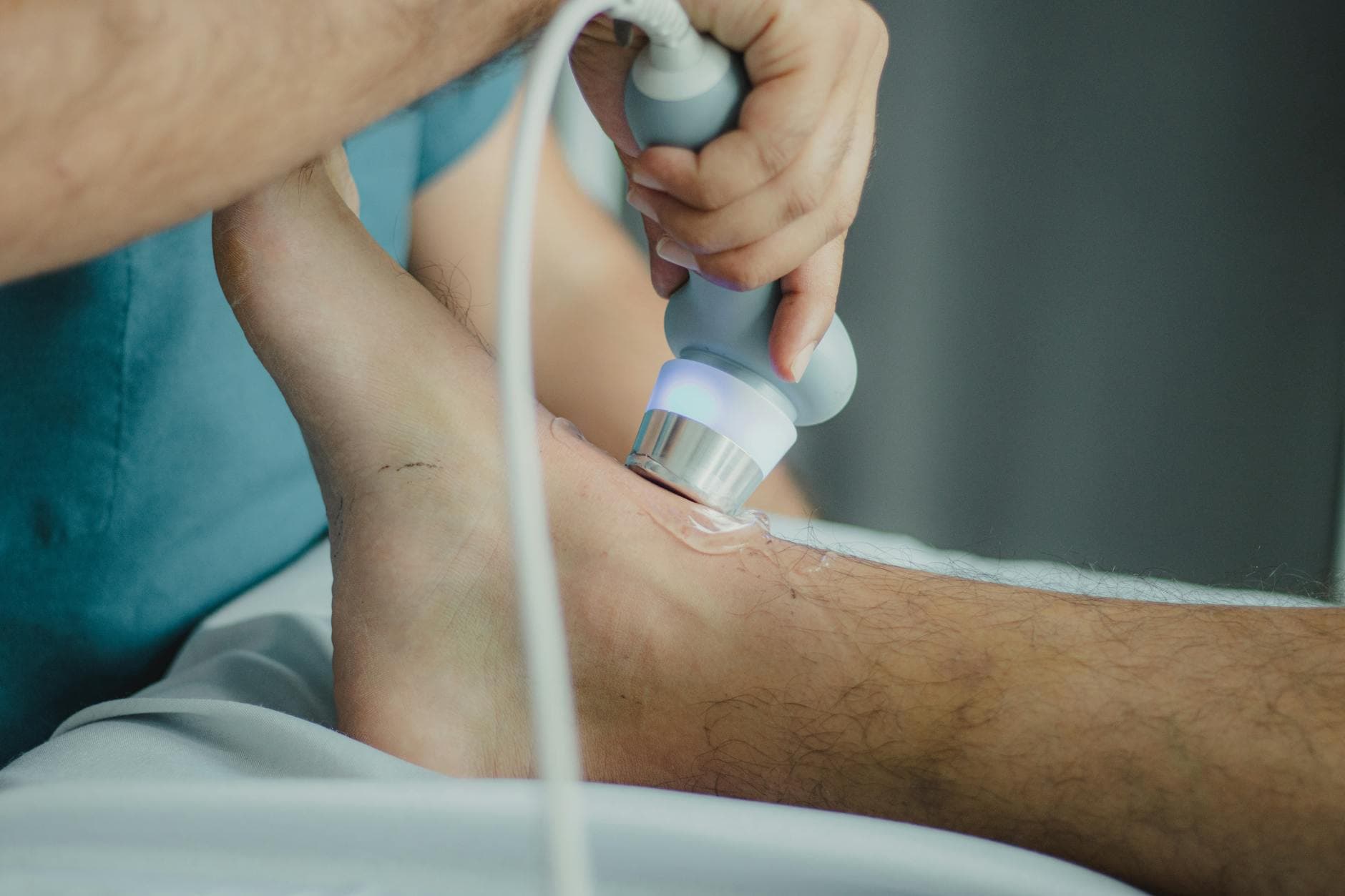
Shockwave therapy delivers acoustic energy through the skin to targeted tissue areas. The device generates pressure waves that your provider directs to the treatment site using a handheld applicator and coupling gel.
There are two primary modes used in clinical practice:
Radial shockwave disperses energy over a broader area. It is the more common mode for musculoskeletal applications in outpatient settings and the type most providers start with.
Focused shockwave concentrates energy at a specific depth. It reaches deeper tissue and is used for conditions where precision matters.
Both modes are delivered through FDA-cleared Class II devices. Sessions are performed in-office with no anesthesia required for most applications, though topical anesthesia may be applied depending on the treatment area. The device does the work. Your clinical team operates it after initial training.
Applications
Shockwave therapy has its strongest clinical footing in musculoskeletal conditions. The FDA-cleared indications for orthopedic shockwave devices include:
One of the most common entry-point applications for practices adding shockwave therapy. A 2024 meta-analysis of 11 RCTs found both focused and radial ESWT significantly reduced pain intensity.[2]
Lateral epicondylitis (tennis elbow), Achilles tendinopathy. A meta-analysis of 13 RCTs (1,035 patients) found ESWT significantly improved pain scores and grip strength for lateral epicondylitis.[3]
Where acoustic energy is directed at calcium deposits. A systematic review of 28 RCTs in the Annals of Internal Medicine found high-energy ESWT significantly decreased pain and promoted resorption of calcifications.[4]
These are the conditions where shockwave therapy equipment is common in outpatient orthopedic and sports medicine settings. Your clinical judgment guides how shockwave therapy fits into your treatment protocols alongside existing modalities.
Off-Label Applications
Some providers have explored shockwave therapy for sexual health applications, including erectile dysfunction. These uses fall outside the FDA-cleared indications for shockwave therapy devices.
Providers interested in these applications should review the current literature independently and consult with their legal and compliance advisors before offering off-label services.
Regulatory Notice
Applications beyond the device's FDA-cleared orthopedic indications are considered off-label. Clinical application decisions rest with the treating provider. Luci Medical provides published clinical literature to support informed decision-making.
Service Integration
Practices that add shockwave therapy often treat patients who benefit from complementary modalities. Building a multi-device service menu lets your team address a broader range of conditions without referring out.
PEMF therapy pairs naturally with shockwave in orthopedic and sports medicine settings. Both target musculoskeletal conditions, and PEMF's non-invasive sessions can complement shockwave protocols for patients in active treatment plans. Learn more.
Red light therapy is another option for practices looking to expand. With near-zero consumable costs and short session times, it adds a low-overhead complement to shockwave's musculoskeletal focus. Learn more.
Luci Medical supports multi-device practices with consolidated ordering, combined clinical education, and a single point of contact for your device portfolio.
For Providers
Shockwave therapy is a cash-pay service line. No insurance billing, no reimbursement delays, no prior authorizations. The margin structure is straightforward: minimal consumable cost per session and strong revenue per treatment relative to chair time.
These figures are sourced from manufacturer-published data, not independently verified research. Actual results depend on your utilization, geography, and practice type.
Shockwave therapy uses acoustic pressure waves directed at the treatment area through a handheld device. Your provider applies a gel to the skin and guides the applicator over the targeted area.
What a typical visit looks like:
Your provider will evaluate whether shockwave therapy is appropriate for your specific situation, your health history, and your goals. Not every condition responds to acoustic wave therapy, and your provider is the right person to help you understand what to expect.
Education
Adding a shockwave therapy device is the first step. Building the clinical confidence to use it well is where Luci Medical's partnership model adds value. Published best practices for ESWT recommend standardized training curricula and structured treatment protocols.[5]
Your team handles the clinical work. We handle device selection, education, patient materials, and ongoing technical support.
We match the device to your practice: patient volume, specialty mix, and budget.
Hands-on shockwave therapy education for your clinical team covering device operation, protocol development guidance, and patient screening.
Technique training for both radial and focused applications.
Technical support and product guidance as your team builds experience.
Patient education materials ready for your practice.
Common Questions
Important Disclosures
Device disclaimer
Shockwave therapy devices distributed by Luci Medical are FDA-cleared Class II medical devices for specific orthopedic indications. Clinical applications are determined by the treating provider's clinical judgment. Applications beyond the device's FDA-cleared indications are considered off-label. Clinical application decisions rest with the treating provider. Luci Medical provides published clinical literature to support informed decision-making.
Clinical outcomes
Individual clinical outcomes vary based on patient health, condition, and clinical protocol. Clinical applications beyond the device's cleared indications have not been evaluated or cleared by FDA.
Financial disclaimer
Revenue and financial figures cited are sourced from manufacturer-published data and are not independently verified. Actual practice revenue depends on patient volume, pricing, market conditions, and operational factors. These are not projections of your practice performance.
A 15-minute call to discuss devices, economics, and implementation for your practice.